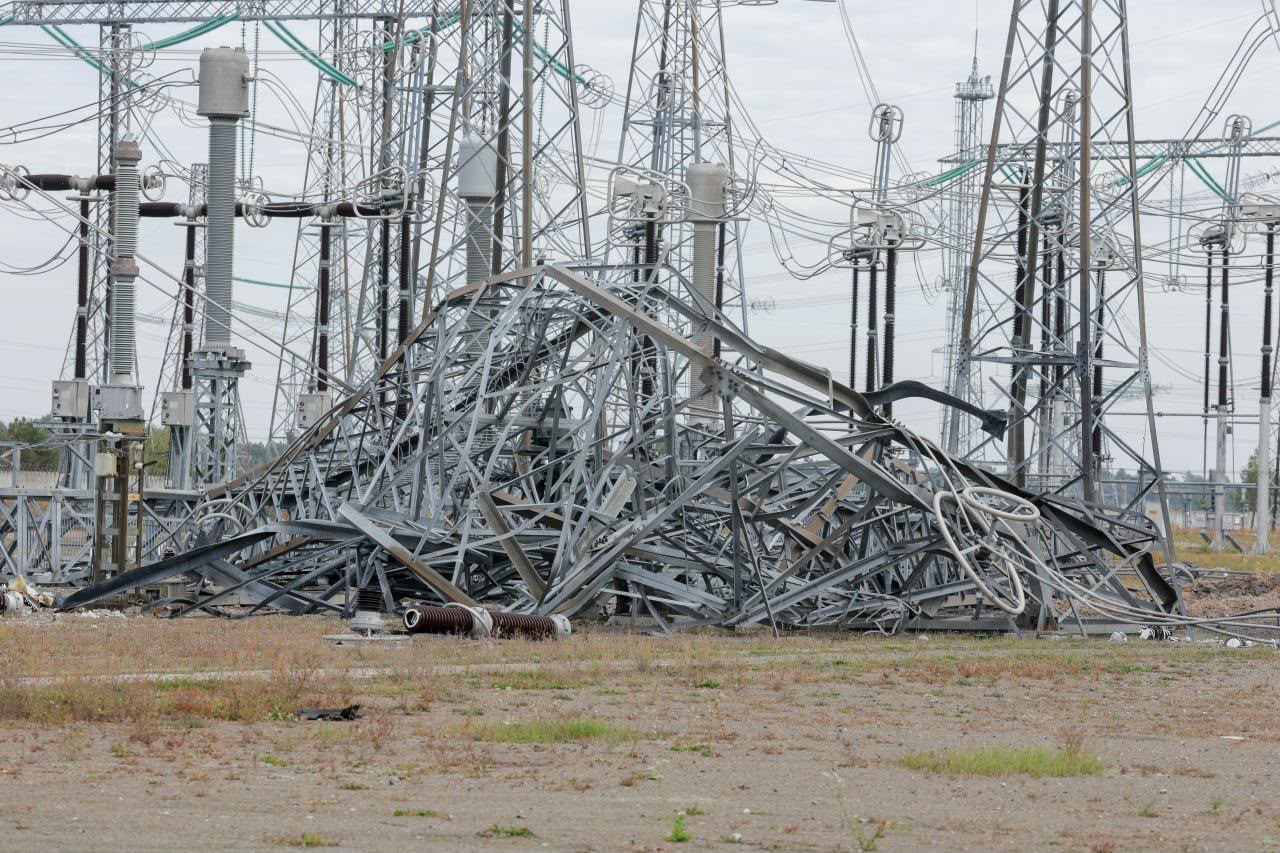
Russia continues to attack Ukraine’s energy infrastructure relentlessly. Damage to the power grid caused by these attacks has reduced the system’s ability to transmit electricity, making restrictions necessary.
This is a necessary step to prevent overloading the grid and protect the power system from large-scale emergencies.
You can check the outage schedule for your address on your regional distribution system operator’s website via this link.
Why Are Outage Schedules Introduced, and What Determines Them?
Electricity supply restrictions may become necessary for several reasons:
- Russian attacks on energy facilities;
- Emergencies in the power grid;
- Scheduled grid maintenance;
- Natural disasters and severe weather, such as thunderstorms, storms and floods.
Repairing energy facilities takes time and requires equipment. Power supply may also need to be disconnected to allow energy workers to carry out repairs safely.
There are several types of outages:
- Emergency outages — triggered by system failures or local damage, including damage caused by Russian attacks. In these cases, emergency outage schedules (EOS) and capacity restriction schedules (CRS) are applied.
- Stabilisation outages (hourly outages) — hourly outage schedules (HOS) are introduced during peak demand or when necessary to balance the power system. Emergency outage schedules, capacity restriction schedules and hourly outage schedules divide consumers into groups, with specific groups affected in turn.
- Scheduled outages — carried out for planned maintenance. Distribution system operators notify consumers of these outages in advance.
Why Might Stabilisation Outage Schedules Not Be Followed Exactly?
After an outage, electricity supply is restored to consumers gradually. This takes time.
If the load on the power system exceeds the permitted level while electricity supply is being restored, the outage may last longer.
If an emergency occurs, emergency outages may be imposed in addition to stabilisation outages. In this case, electricity supply may remain unavailable for longer, until the fault is resolved.