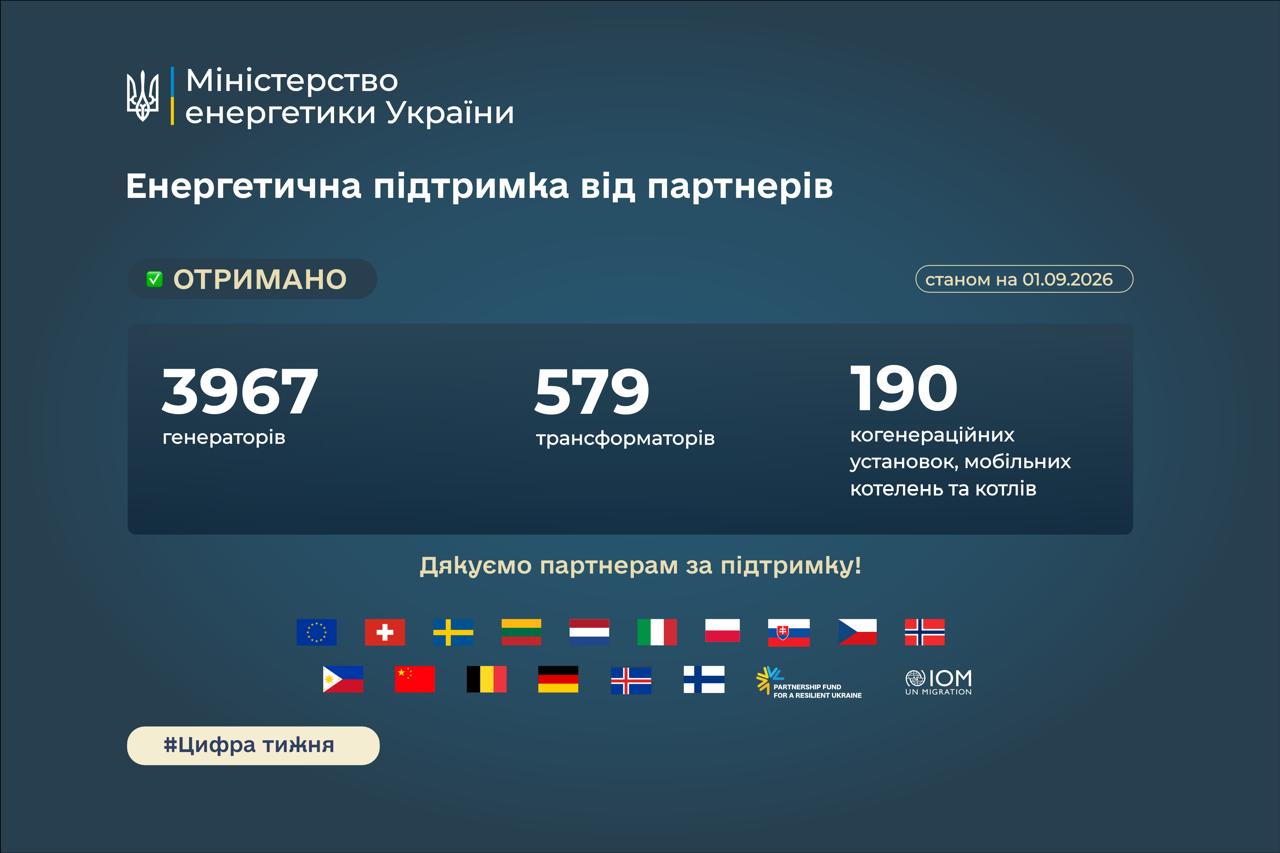
Since the beginning of the year, 4,736 units of energy equipment have been delivered to Ukraine. These include generators, transformers, modular boiler houses, cogeneration units, boilers and other equipment.
The assistance has been provided by partners from the EU, as well as Austria, Azerbaijan, Belgium, Denmark, Estonia, Iceland, Spain, Italy, Canada, Latvia, Lithuania, Luxembourg, Moldova, the Netherlands, Germany, Norway, Slovakia, the United States, Türkiye, Finland, France, the Philippines, Switzerland, Sweden, Japan, Czechia, Poland, Cyprus, China, UNICEF/WASH, IOM, PFRU and VOLVO.
A further 767 generators, 266 transformers and 123 units of other equipment, including boilers, modular boiler houses and cogeneration units, are expected to be delivered.
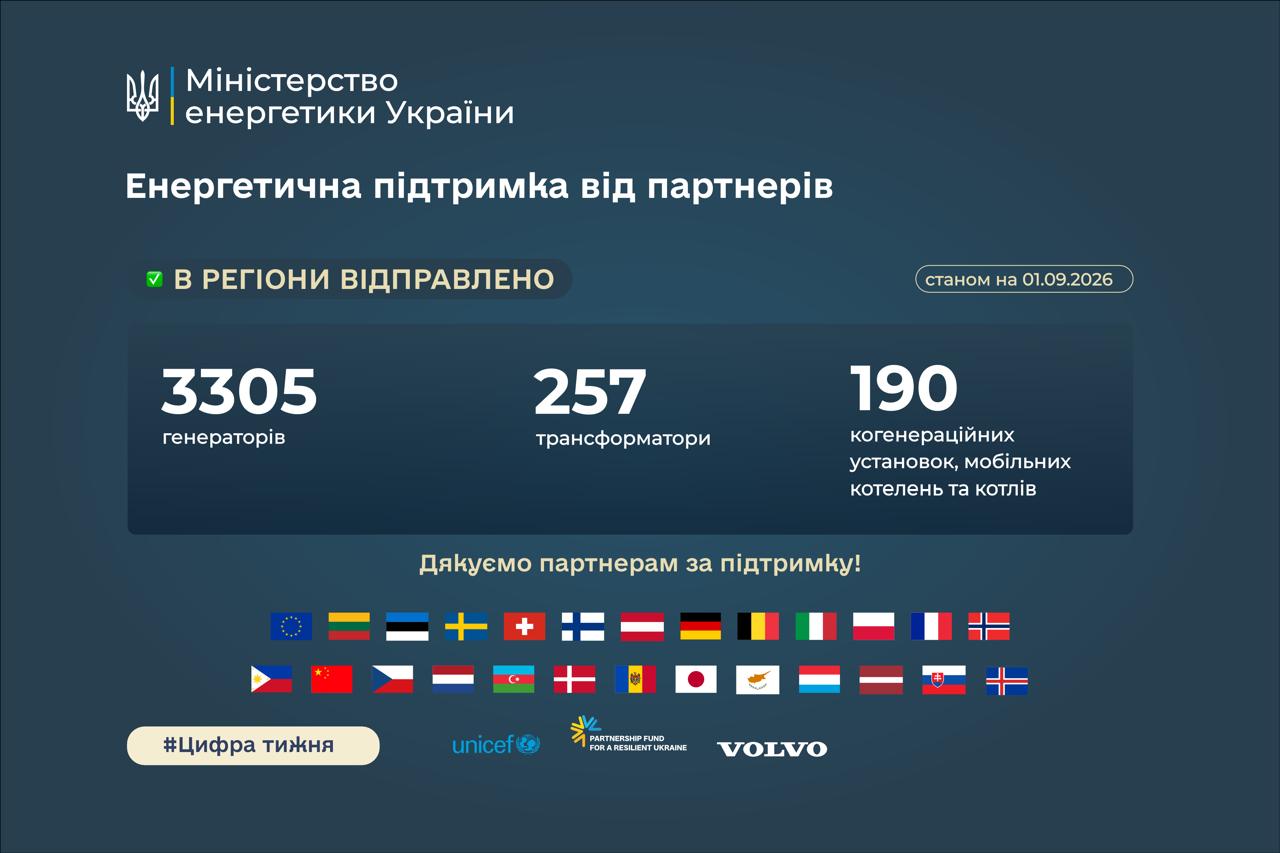
Since the beginning of the year, 589 humanitarian shipments with a total weight of 5.6 thousand tonnes have been dispatched from hub warehouses to the regions. These included 3,305 generators, 257 transformers and 190 modular boiler houses, cogeneration units and boilers.
Overall, since March 2022, with the coordination of the Ministry of Energy, 2,557 humanitarian shipments of energy equipment with a total weight of more than 32.5 thousand tonnes have been delivered to Ukraine, of which more than 29.5 thousand tonnes have already been distributed among the regions.
Since the beginning of Russia’s full-scale invasion, energy-related humanitarian assistance has been provided by 41 countries, including Austria, Azerbaijan, Belgium, the United Kingdom, Greece, Denmark, Estonia, Ireland, Iceland, Spain, Italy, Canada, the Republic of Cyprus, Latvia, Lithuania, Luxembourg, Moldova, the Netherlands, Germany, Norway, North Macedonia, Poland, the Republic of Korea, Romania, Serbia, Slovakia, Slovenia, the United States, Hungary, Finland, France, the Philippines, Croatia, Czechia, Switzerland, Sweden, Japan, the United Arab Emirates, the Republic of Bulgaria, Türkiye and the People’s Republic of China. Humanitarian assistance has been provided by both energy companies and national governments.