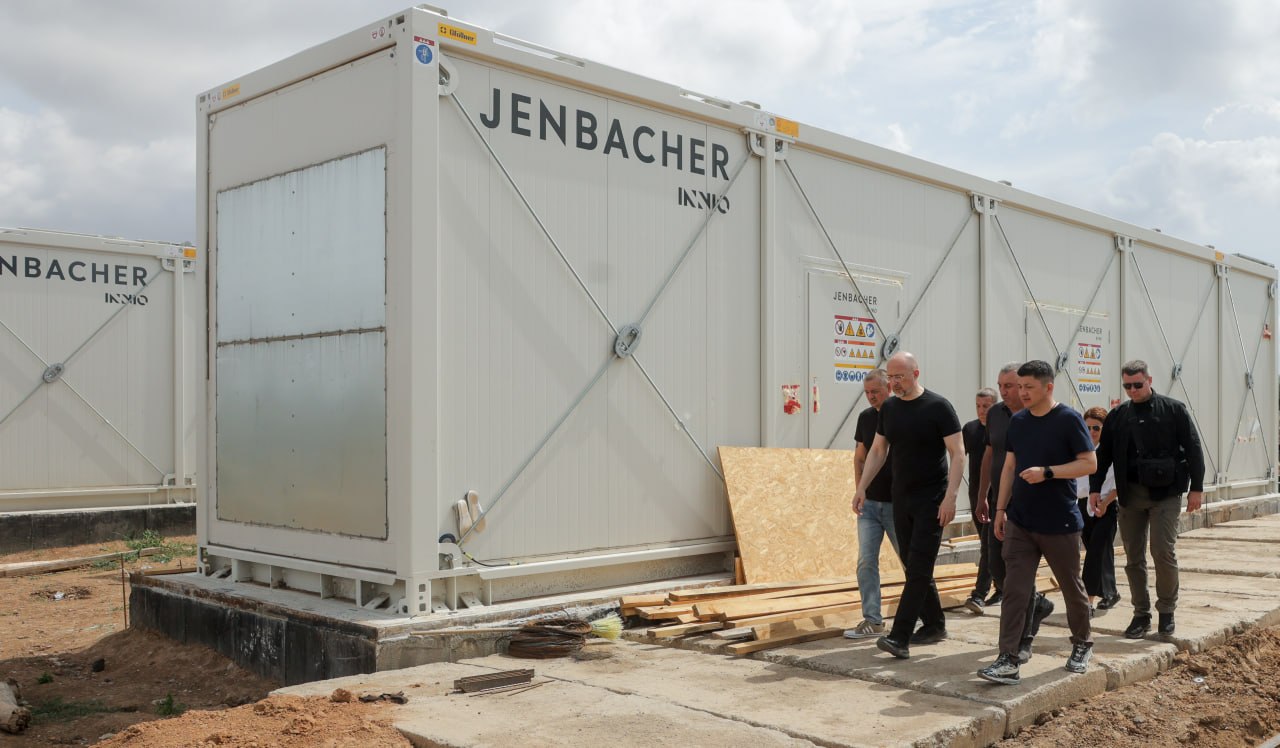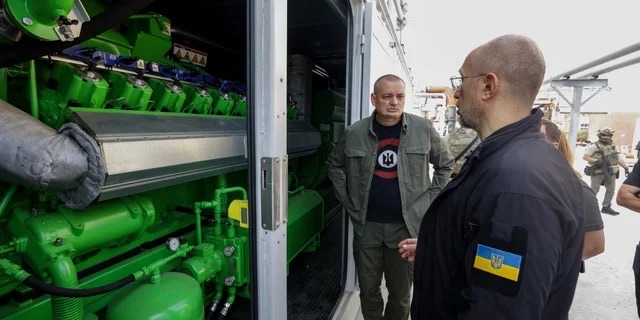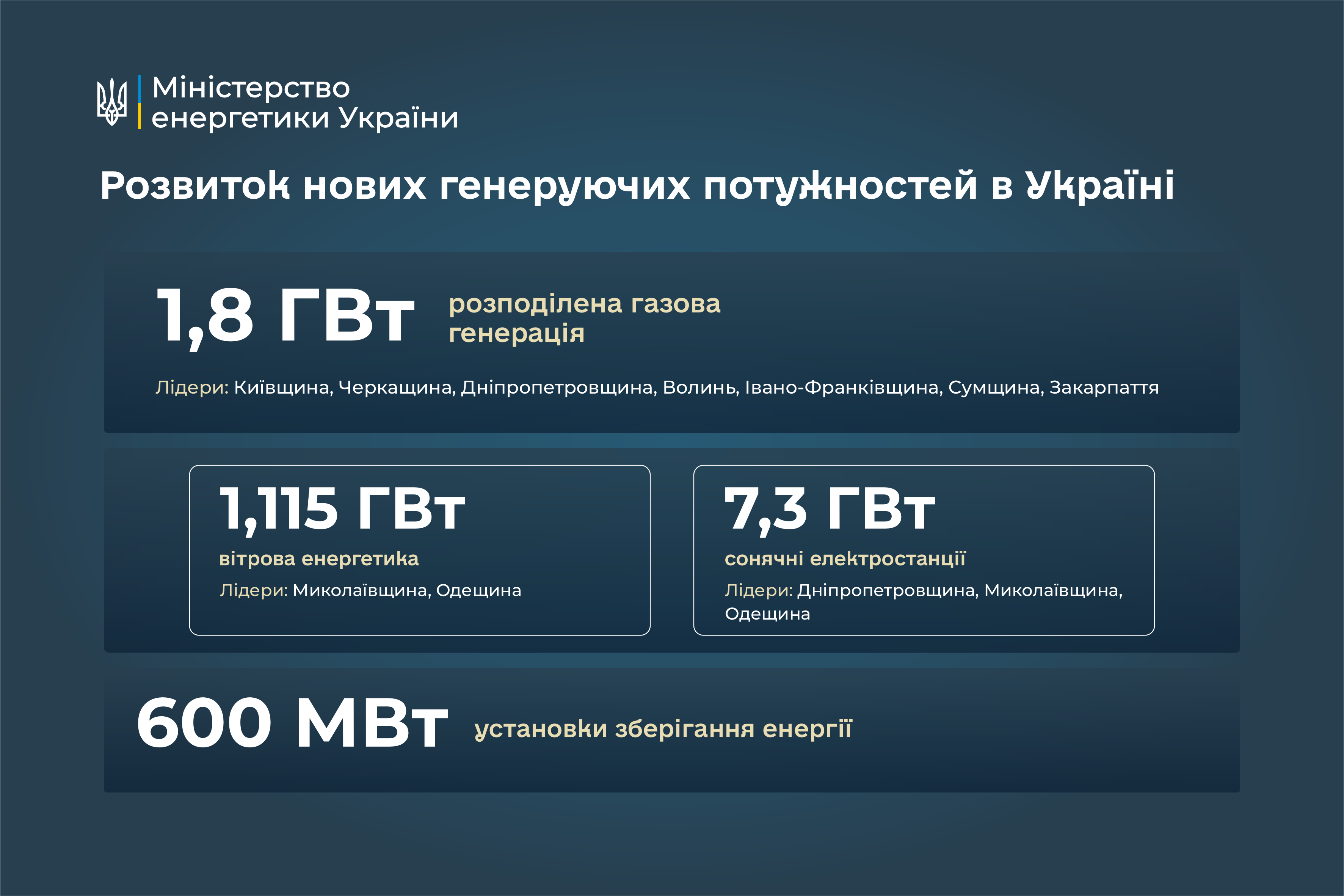
According to regional data, approximately 1.8 GW of distributed gas-fired generation capacity has now been installed across Ukraine.
Kyiv region leads in the deployment of gas-fired cogeneration units, with more than 219 MW installed. More than 100 MW of capacity has also been installed in the Cherkasy (129.3 MW), Dnipropetrovsk (118.2 MW), Volyn (113.6 MW), Ivano-Frankivsk (108.8 MW), Sumy (103.6 MW), and Zakarpattia (100.3 MW) regions.
As part of the implementation of regional resilience plans, 388.8 MW of gas-fired generation capacity has been commissioned since March 2026. Construction is currently underway on 247 generating units with a combined capacity of 532.2 MW.
Alongside gas-fired cogeneration, Ukraine continues to expand its renewable energy capacity, particularly in wind and solar generation.
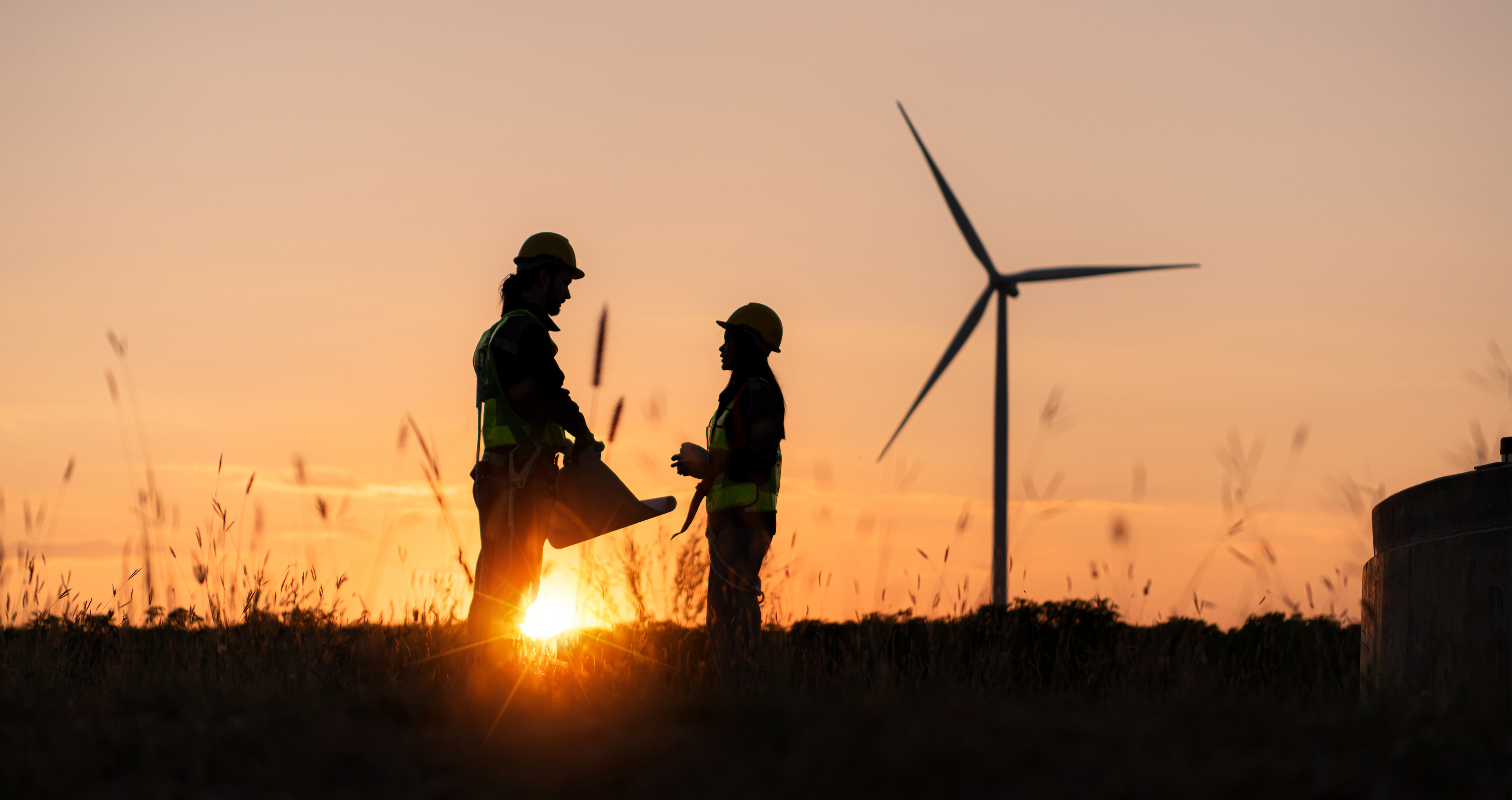
During the first half of 2026, 414.8 MW of wind power capacity (70 wind turbines) was commissioned. Ukraine’s total installed wind generation capacity has now reached 1.115 GW, with the largest capacities located in the Mykolaiv region (over 400 MW) and the Odesa region (over 200 MW).
According to NPC Ukrenergo, the country’s total installed solar generation capacity currently stands at 7.3 GW, including 5.4 GW from commercial producers and 2.25 GW from active consumers (prosumers). The largest installed capacities are in the Dnipropetrovsk region (947 MW), Mykolaiv region (782 MW), and Odesa region (515 MW).
At the same time, Ukraine is rapidly expanding its energy storage capacity. Over the past year, the total installed capacity of energy storage systems has increased by more than 300 times, exceeding 600 MW.
Energy storage systems provide an additional tool for balancing the power system and making more efficient use of electricity generated from renewable sources. By storing excess solar generation during the day, these systems can feed electricity back into the grid during morning and evening peak demand periods.