The final meeting of the Headquarters for the Elimination of the Consequences of the Energy Emergency, established in January 2026, was held under the chairmanship of First Deputy Prime Minister of Ukraine – Minister of Energy of Ukraine Denys Shmyhal.
“We are adapting the coordination format to ensure effective preparation for the next heating season. In total, 36 meetings were held and dozens of decisions were adopted to stabilize the situation in the energy system,” the Minister noted.
Key outcomes of the Headquarters’ work include:
- Simplified procedures for connecting backup equipment to the grid: connection, review and approval, as well as issuance of technical conditions — each stage limited to two days.
- Enhanced protection of critical infrastructure through additional air defense systems and electronic warfare measures, including improved interception of threats via the integration of critical facilities into mobile fire units.
- Introduction of a mechanism under which scheduled hourly outages are not applied to distributed generation facilities supplying at least 80% of consumers connected to a single line.
Denys Shmyhal emphasized that Ukraine successfully completed the heating season despite numerous attempts by Russia to destroy the energy system, made possible, inter alia, by the accumulation of sufficient resources.
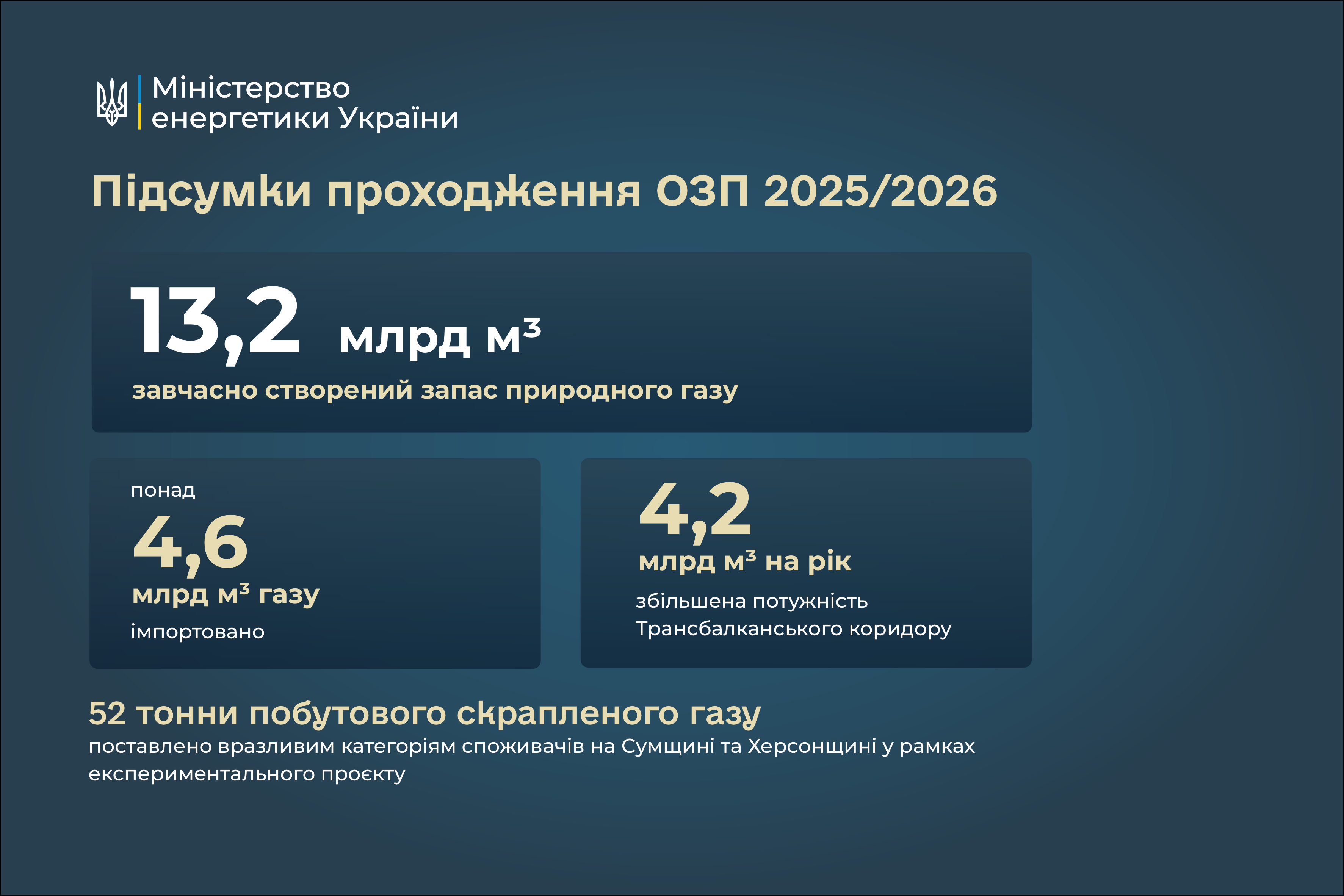
Ukraine entered the autumn-winter period with gas reserves of 13.2 bcm, while gas imports exceeded 4.6 bcm.
In 2025, domestic gas production reached 16.97 bcm, exceeding forecasts by 2.4 bcm, with the private sector recording growth of over 14%. Additionally, 52 tonnes of liquefied gas were supplied to vulnerable households in Sumy and Kherson regions under a pilot project.
The capacity of the Trans-Balkan corridor was increased to 4.2 bcm per year.
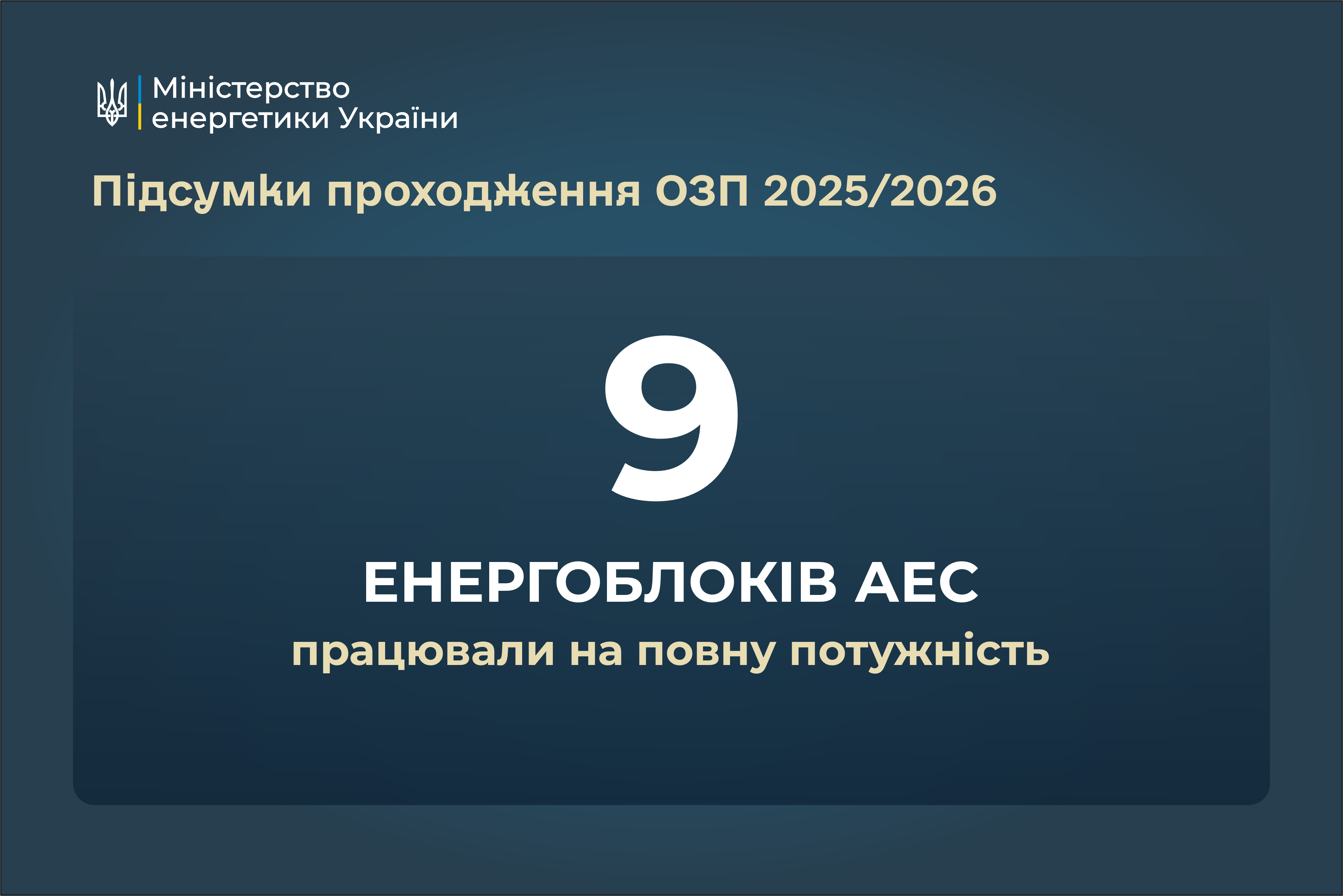
All nine nuclear power units operated throughout the period, with a total installed capacity of 7,835 MW.
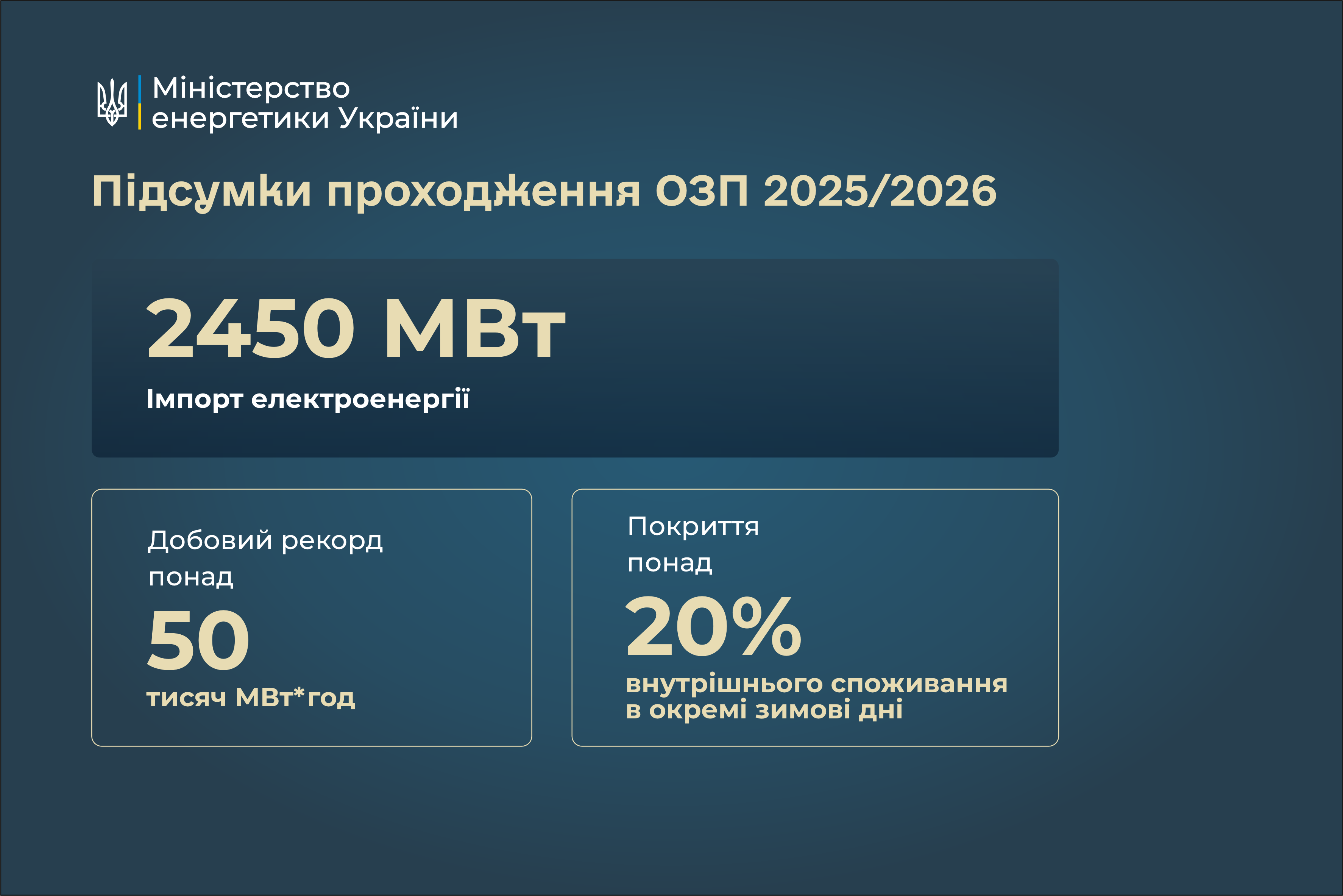
Electricity import capacity from the EU was expanded, reaching a record peak of 2,450 MW. In total, approximately 3.6 billion kWh of electricity were imported between December and February.
Coal reserves remained sufficient throughout the winter, totaling 2.4 million tonnes — 0.8 million tonnes above the planned level.
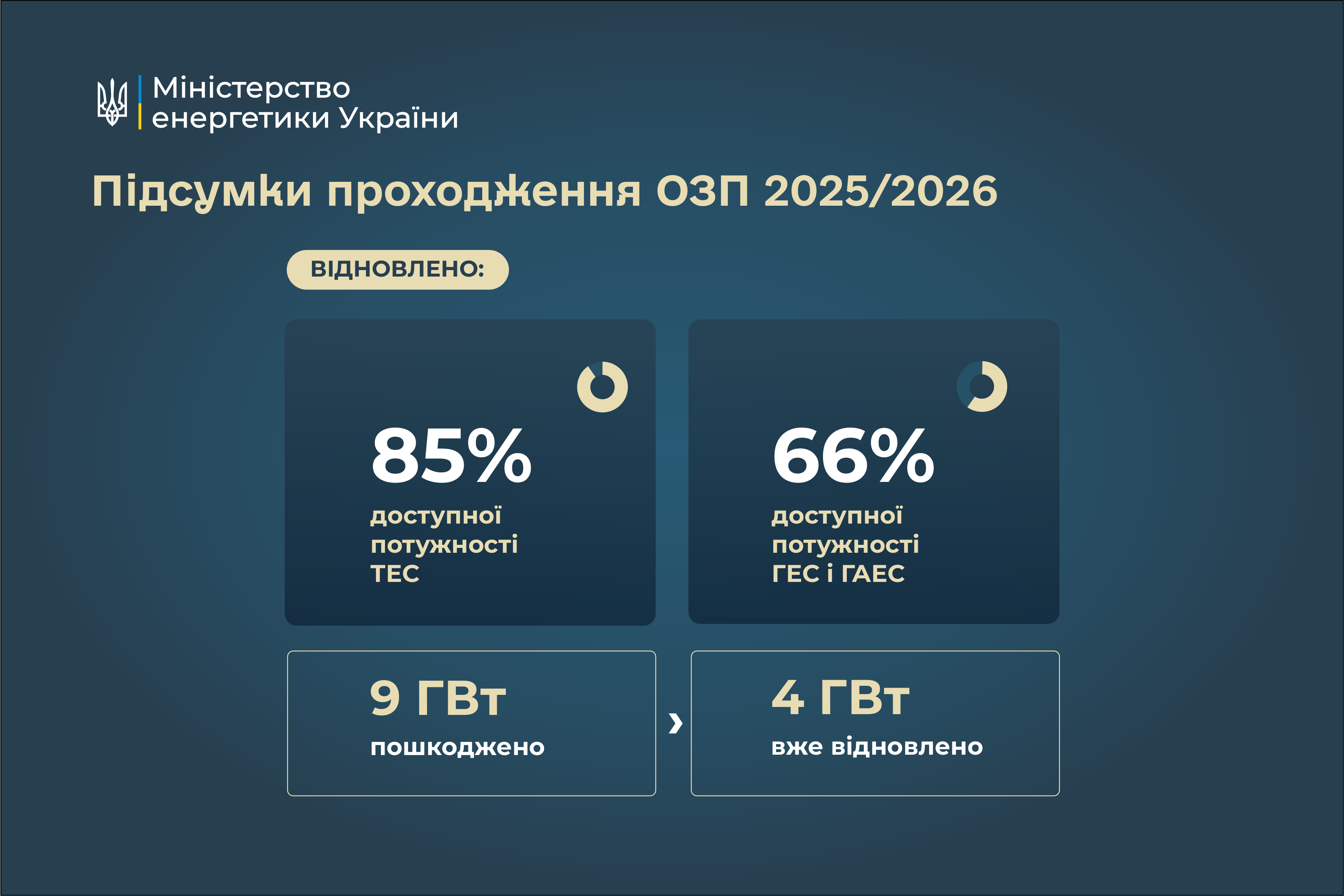
The Minister stressed that during the heating season, enemy attacks damaged more than 9 GW of generation capacity across thermal, combined heat and power, and hydropower facilities, while Ukrainian energy workers restored over 4 GW.
- 85% of available thermal generation capacity and 66% of hydropower and pumped storage capacity were restored following Russian attacks.
- Transmission system transformer equipment equivalent to approximately 30% of Latvia’s total transformer capacity was repaired.
- Planned maintenance totaling 11.8 GW was completed in 2025, contributing to the successful passage through the heating season.
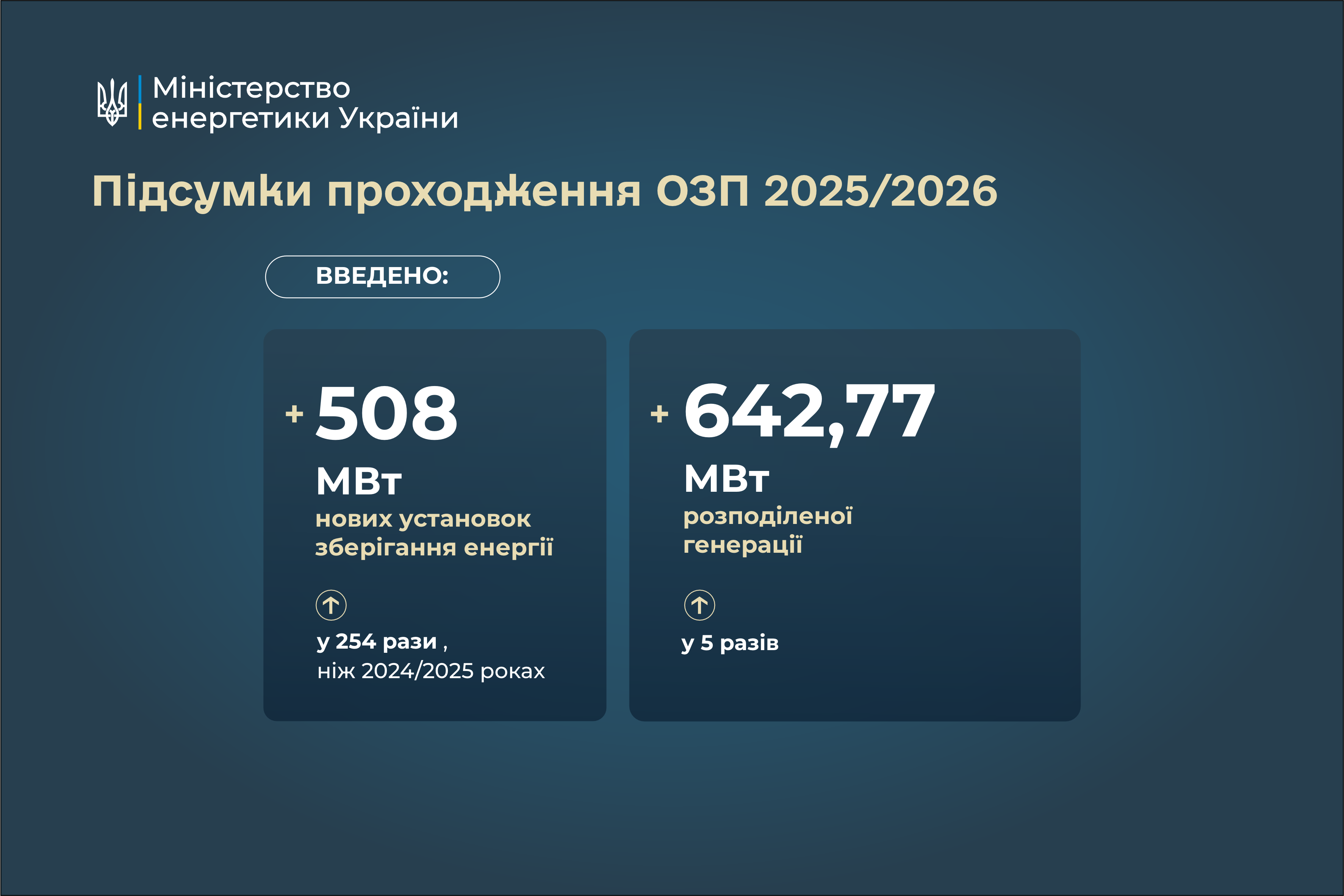
- Development of distributed generation continued, with an increase of 642.77 MW in installed capacity during 2025.
- New energy storage facilities totaling 508 MW were installed — 254 times more than in the previous heating season.
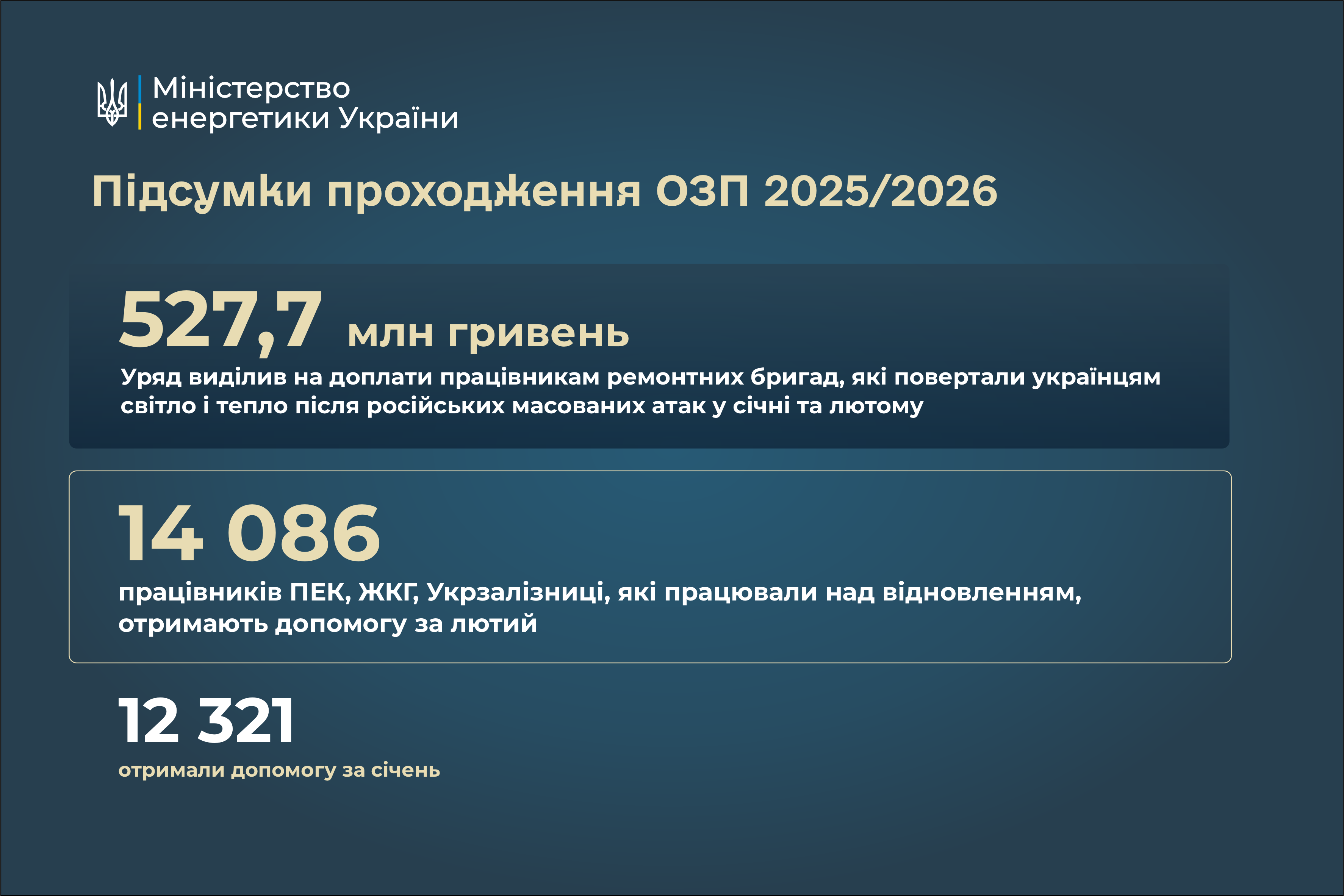
More than 14,000 energy workers were involved in restoring energy infrastructure.
To support emergency repair crews restoring electricity and heat after Russian attacks, additional payments of UAH 20,000 were introduced. The Government allocated UAH 527.7 million for this purpose. In January, more than 12,300 workers received payments. The program continues, with the next tranche to be disbursed for work completed in March.
During the winter, Ukraine consolidated international energy support and introduced a new coordination format, enabling the mobilization of financial resources and critical equipment for rapid repairs.
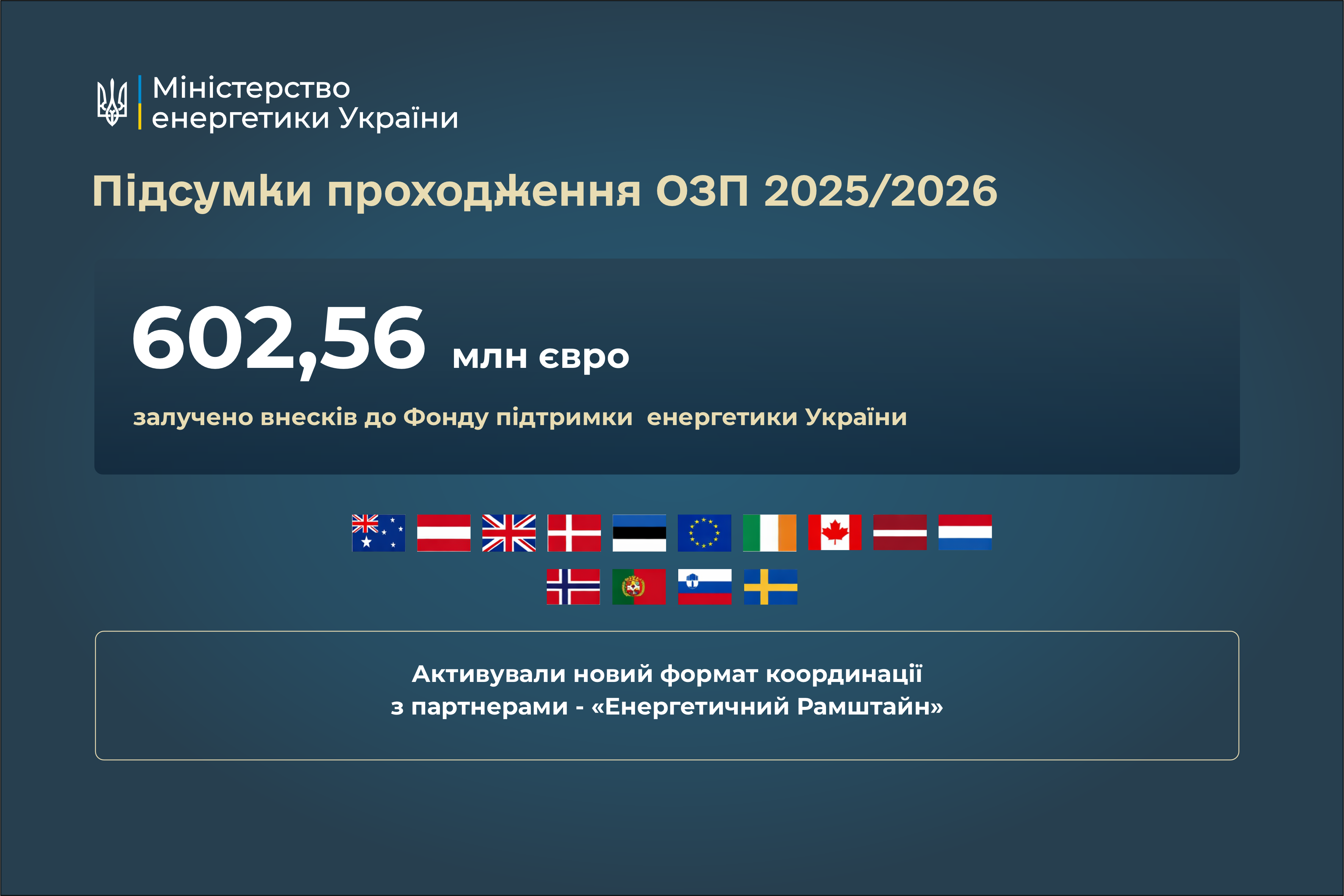
- The so-called “Energy Ramstein” format was launched, improving partners’ understanding of the sector’s priority needs.
- A winter energy support coalition was formed, bringing together over 40 countries supplying generators, transformers, cogeneration units, and other equipment.
- €602.5 million was mobilized for the Ukraine Energy Support Fund from 16 countries, the European Union, and the private sector.
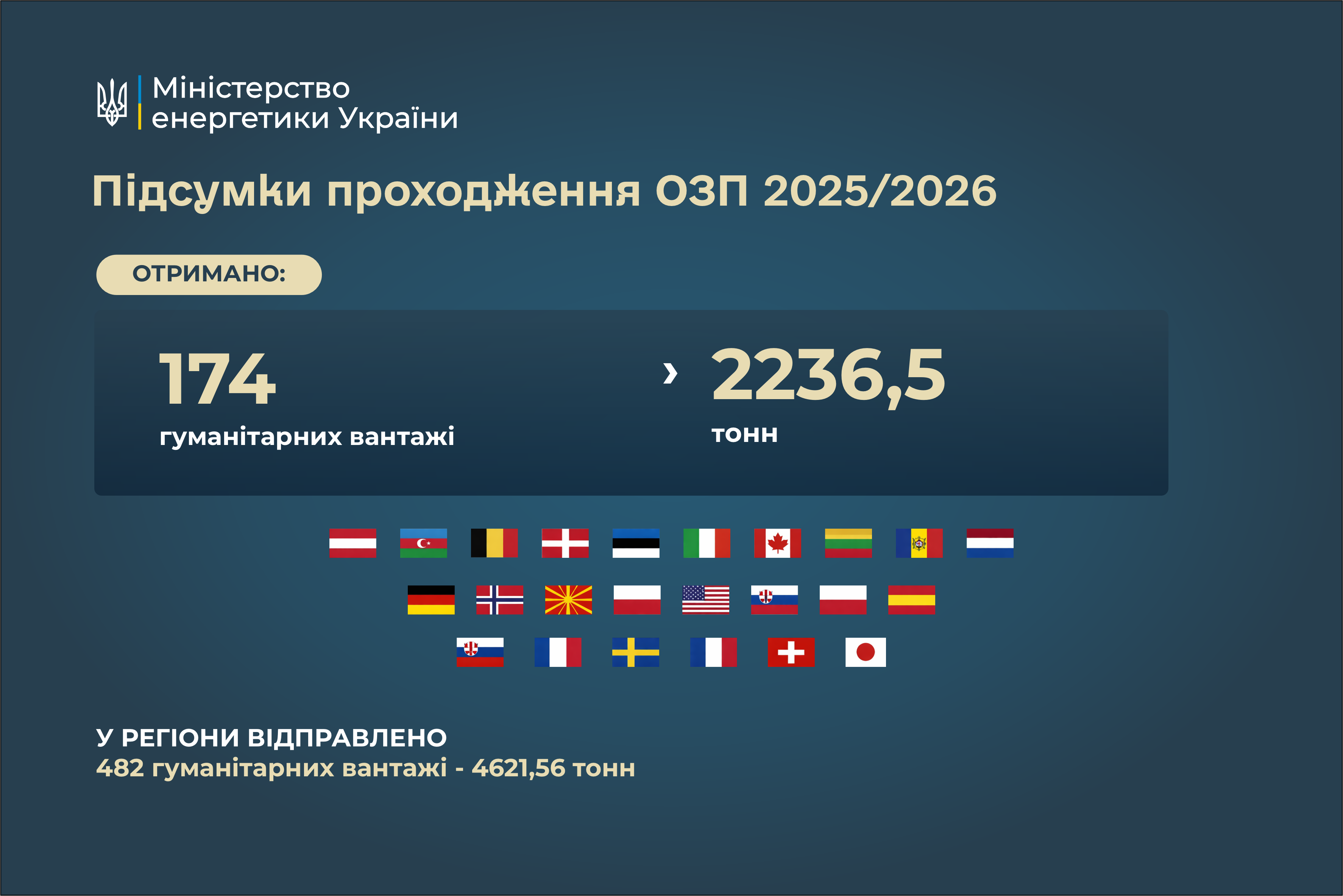
- Energy equipment hub operations were systematized: Ukraine received 174 humanitarian shipments totaling 2,236.5 tonnes from 22 countries, while 482 shipments (4,621.56 tonnes) were distributed through Ministry hubs.
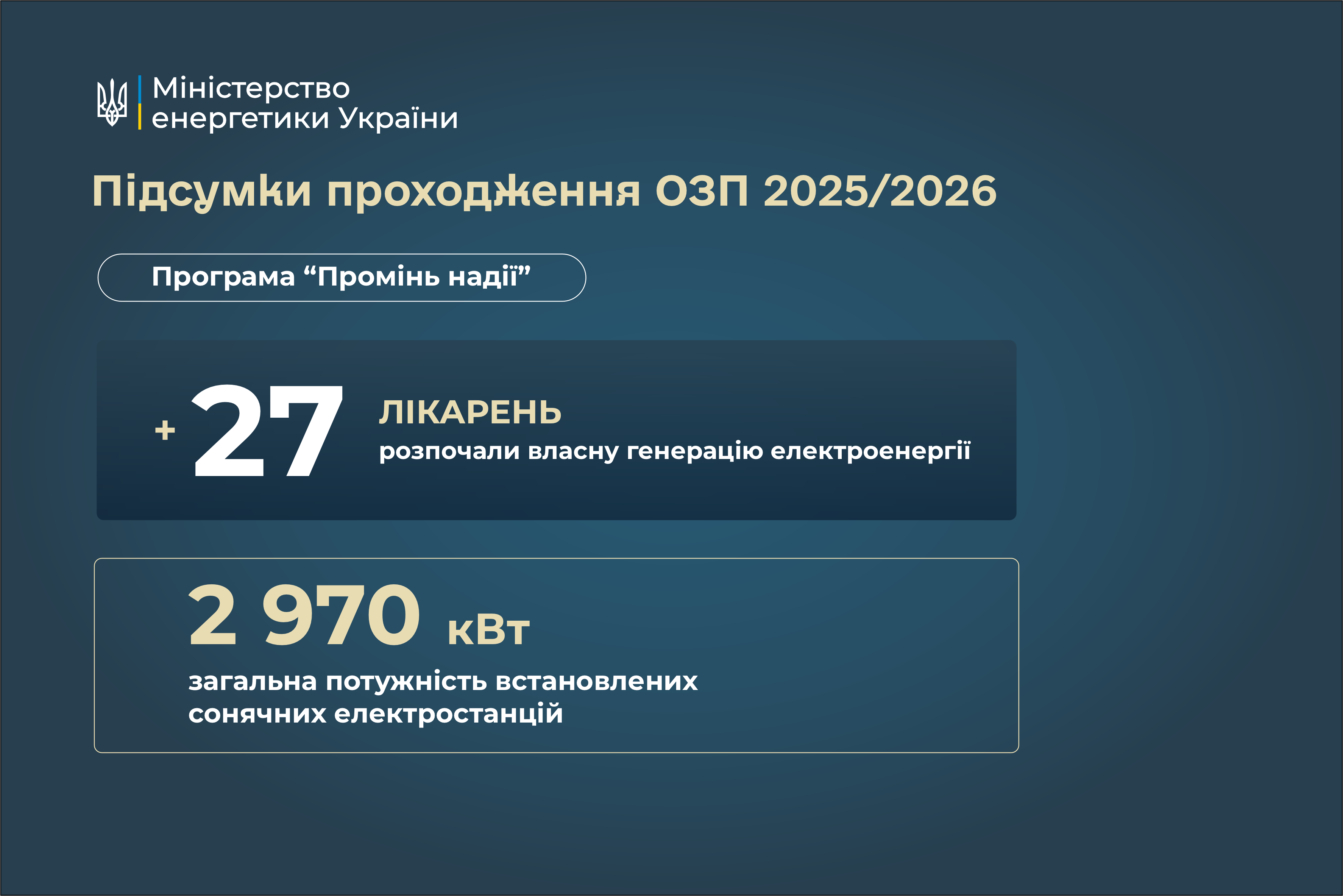
- Under the joint EU initiative “Ray of Hope,” solar power plants were installed in 27 hospitals with a total capacity of 2,970 kW.
“I thank every country that supported Ukraine in withstanding this winter,” Denys Shmyhal concluded.