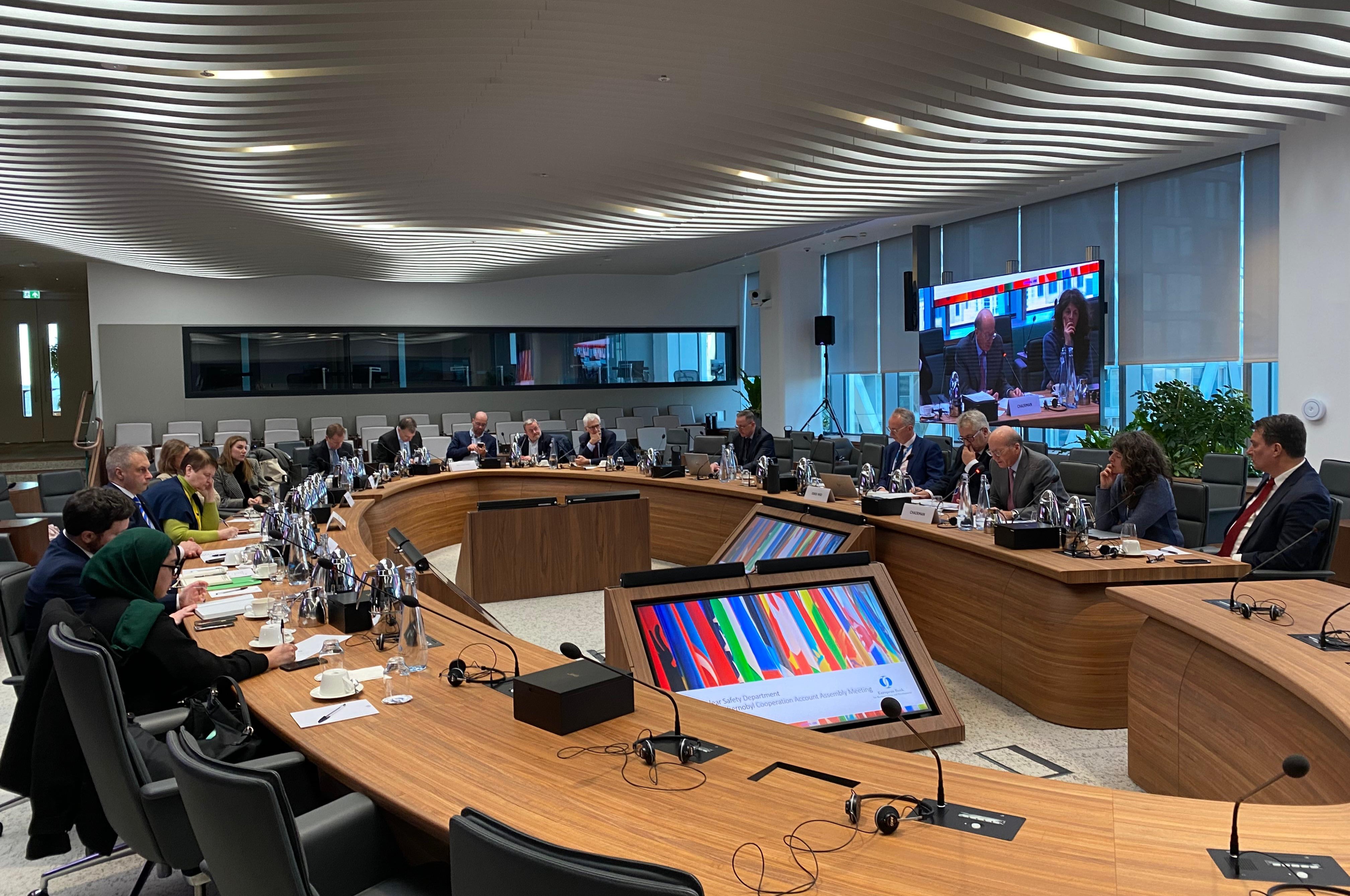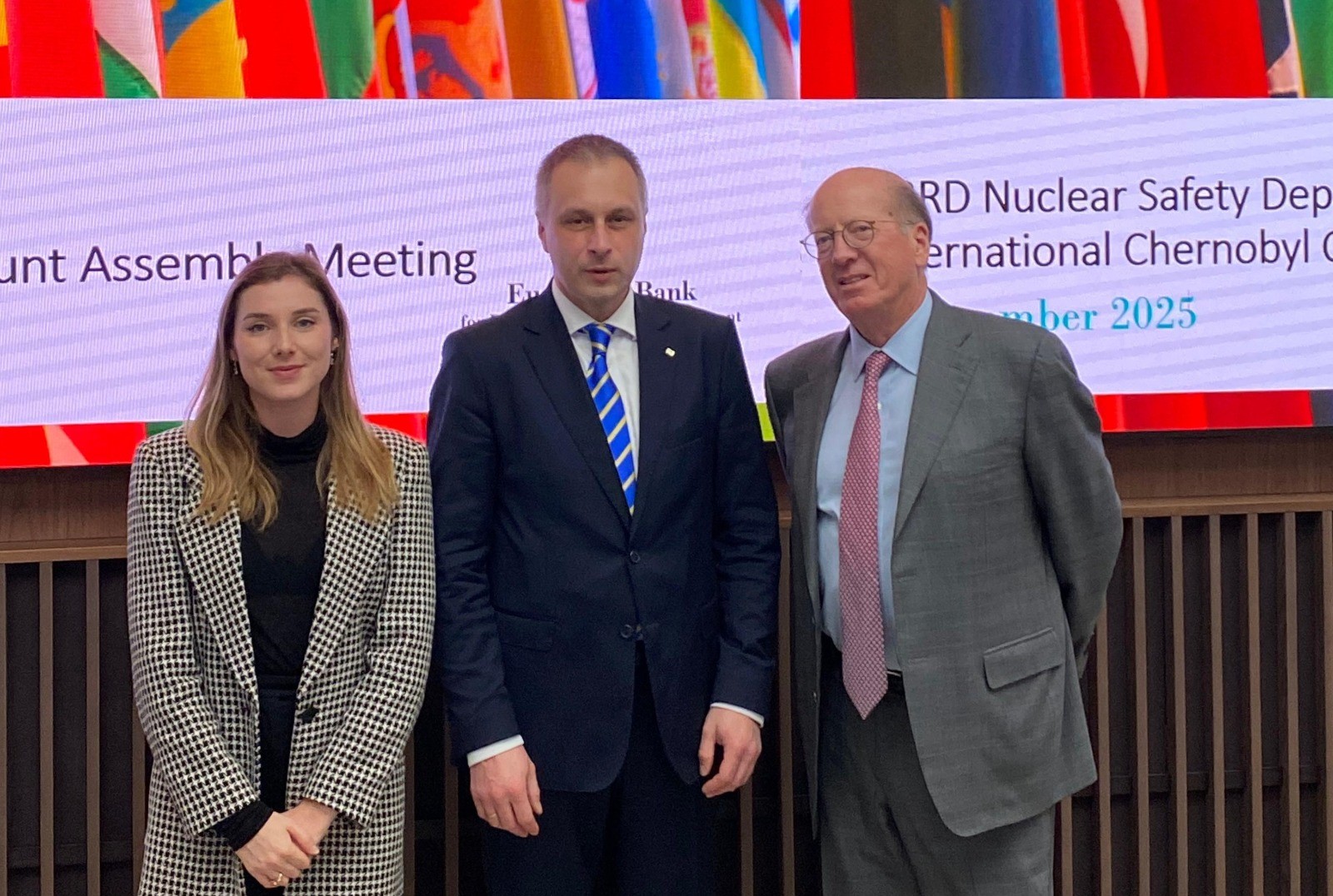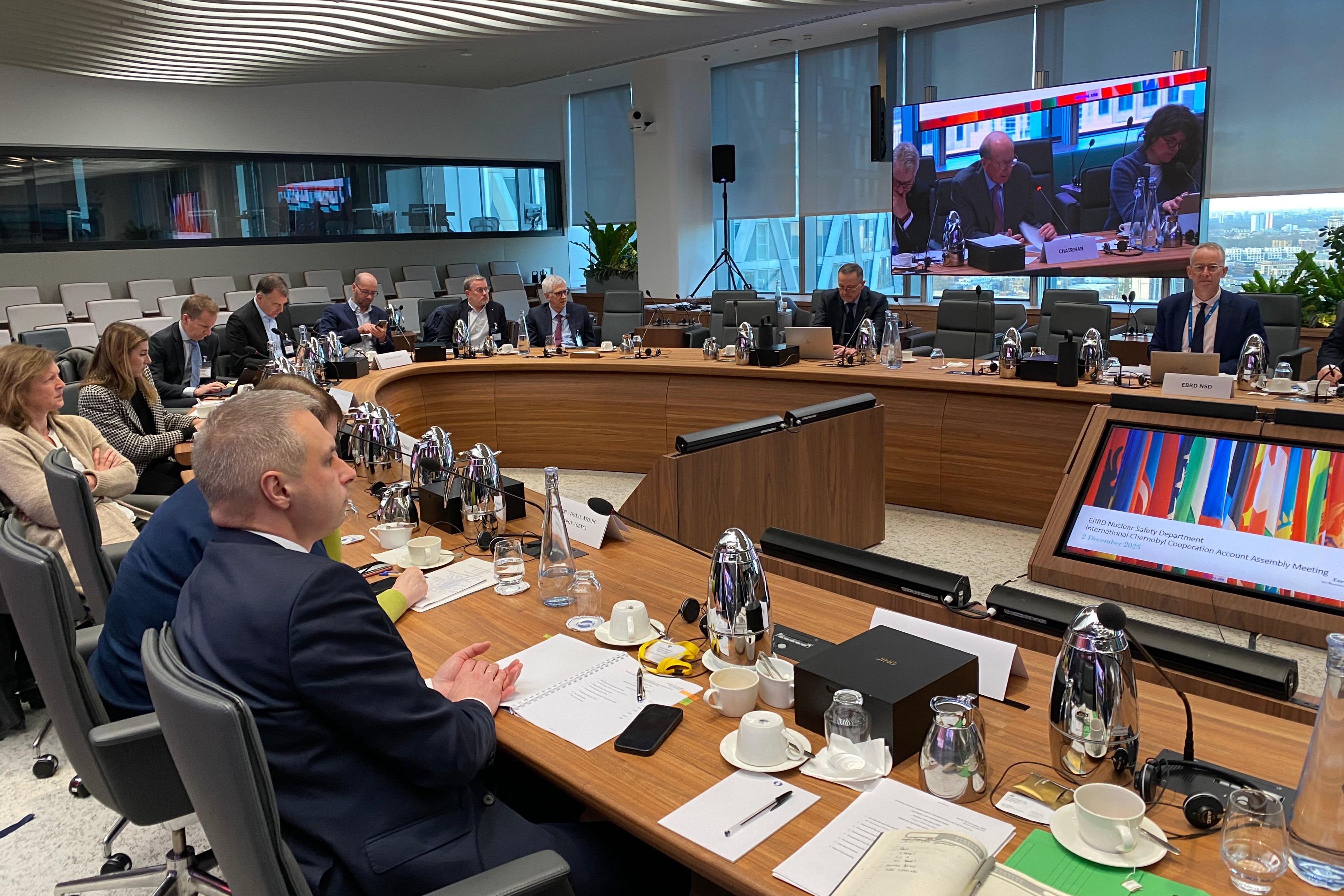
The current status of efforts to address the consequences of the Russian strike on the New Safe Confinement (NSC) Arch and the strategy for fully restoring its functionality were discussed during the meeting of the Assembly of Contributors to the International Cooperation Account for Chornobyl, held in London. Ukraine was represented by Roman Andarak, Deputy Minister of Energy.
Participants reviewed an interim report on the damage sustained by the Arch and an engineering assessment of the possible restoration options. The meeting also considered the findings of the latest IAEA mission to the Chornobyl NPP, conducted last week within the framework of the Memorandum of Cooperation on energy restoration signed between the Government of Ukraine and the IAEA at URC-2025 in Rome. In addition, participants examined a report on urgent works undertaken to prevent depressurization and further deterioration of the Arch.
The Assembly was presented with an analysis of the status of implementation of the five Grant Agreements signed between the EBRD and the Chornobyl NPP, as well as the next steps required for their continued execution.
Deputy Minister Andarak emphasized that Ukraine relies on the continued active support of the EBRD and international partners, noting that the New Safe Confinement remains the most complex radiation protection structure in the world, a unique engineering achievement into which billions of euros and the efforts of dozens of countries have been invested over the past decade. He stressed that the uninterrupted and stable operation of the NSC is critically important not only for Ukraine, but also for Europe and the international community.
Serhiy Tarakanov, Director General of the Chornobyl NPP, outlined to the Assembly the key stages and challenges related to the repair of the New Safe Confinement. He informed donors of the completion of emergency works in October 2025, the planned temporary measures through 2026, and the development of long-term solutions. He also highlighted technical uncertainties, the complexity of coordination among numerous stakeholders, and the unique licensing status of the facility. Mr. Tarakanov presented a strategic plan for stabilizing the Shelter’s unstable structures and underscored the importance of timely equipment procurement and the development of dismantling infrastructure.
Phil Bennett, Chair of the Assembly of Contributors to the International Cooperation Account for Chornobyl, reaffirmed that the international community remains committed to supporting nuclear safety and will not allow decades of collective work to be undermined.
Partners acknowledged that restoration efforts will require substantial funding and renewed long-term commitments. The EBRD is currently examining mechanisms to attract new contributors and adopt a new investment approach. An increase of 20% in the Account’s administrative budget for next year - to EUR 960,000 - was also announced.
“Today, Ukraine - and together with it, the entire world - is gaining new and unprecedented experience in safeguarding global nuclear safety. The restoration of nuclear power plants is being carried out under extremely difficult conditions due to ongoing shelling by the Russian Federation and repeated attempts to disrupt the country’s stable power supply. Nevertheless, critical recovery efforts continue despite all challenges. We are deeply grateful to the European Bank for Reconstruction and Development, all contributing countries, the IAEA, and other international partners for their effective assistance to Ukraine from the very first day of Russia’s full-scale aggression, as well as for their prompt response to every challenge our country faces,” noted Roman Andarak.
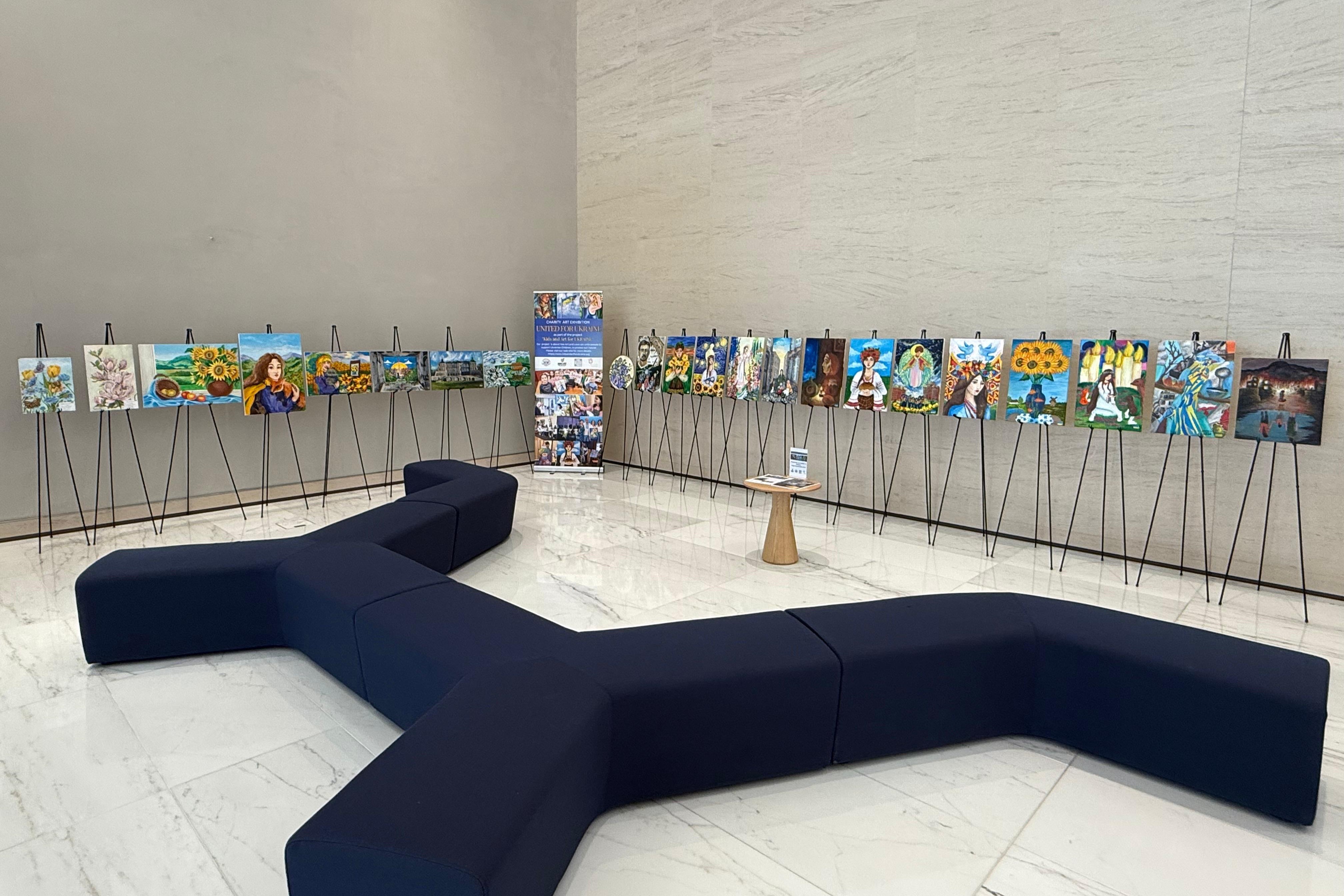
As a symbol of support and solidarity with the people of Ukraine, an exhibition of drawings by Ukrainian children is currently on display at the EBRD headquarters in London, offering visitors a glimpse into today’s reality in Ukraine and its future as seen through the eyes of children.